"More Weight": The Story of Giles Corey and the Salem Witch Trials
Published July 25, 2026
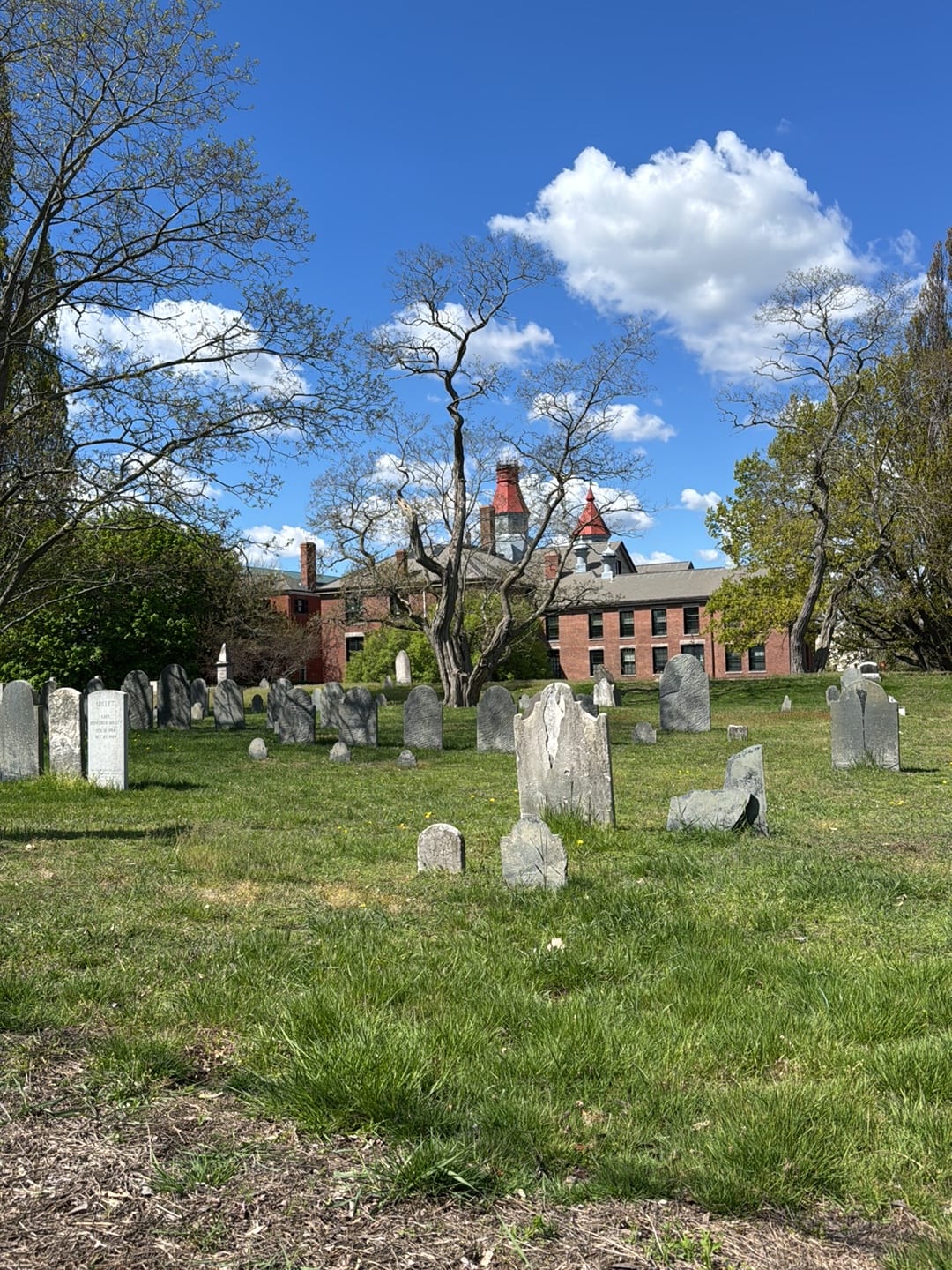
Of all the stories that come out of the Salem Witch Trials, none is quite like this one. In September 1692, an eighty-year-old farmer named Giles Corey was stripped, laid on the ground, and slowly crushed to death under a pile of heavy stones. When the sheriff leaned in and demanded he enter a plea, Corey is said to have answered with just two words:
“More weight.”
He is the only person in American history ever executed by pressing. Here’s how it happened — and why, more than three centuries later, people still leave stones at his memory.
Who was Giles Corey?
Giles Corey was no delicate victim. Born in England around 1611, he was a prosperous, stubborn, and famously cantankerous farmer who owned a good deal of land in Salem Farms. He’d had scrapes with the law across his long life and a reputation for a hot temper. By 1692 he was in his eighties, a full member of the church, married to his third wife, Martha Corey.
That ordinary later-life peace is exactly what the witch hysteria came for.
How the Coreys got swept up in 1692
The accusations began with Martha. She made the mistake of being openly skeptical of the whole affair — she doubted the “afflicted” girls and said so plainly, even trying to stop her husband from going to watch the examinations. In the paranoid logic of 1692, doubting the witch hunt was itself suspicious. Martha was accused, examined in March, and jailed.
Giles, to his lasting regret, initially gave testimony about his wife’s strange behavior that was used against her. It’s one of the quiet tragedies of the story: an old man who helped condemn the woman he loved, then watched the same machine turn on him. By April, Giles Corey himself stood accused of witchcraft.
Why he refused to speak
Here’s the part that makes Corey unforgettable. Brought before the court to be arraigned, Giles Corey refused to enter a plea. Not guilty, not guilty — he said nothing at all. He “stood mute.”
Under the English common law of the day, a trial couldn’t proceed without a plea. And Corey had almost certainly done the grim math. He had watched the court in Salem convict nearly everyone brought before it; a trial was not a path to freedom, it was a formality before the gallows. It has long been said that by refusing to be tried and convicted, he meant to keep his estate from being seized and preserve it for his family rather than letting it be forfeited after a conviction. Historians still debate whether the law truly required that forfeiture — but the account stuck, and it fits everything else we know about the flinty old farmer.
Whatever his exact reasoning, the effect was defiance. He would not give the court the legitimacy of a plea.
Peine forte et dure
The court had an answer for a defendant who wouldn’t speak, a brutal medieval practice called peine forte et dure — “strong and hard punishment.” The prisoner was laid on the ground, a board placed on his chest, and heavy stones piled on, more and more, until he either entered a plea or died.
On September 17, 1692, in a field beside the Salem jail — near what is today Howard Street Cemetery — Sheriff George Corwin began pressing Giles Corey. For two days they added weight. According to the contemporary account of Robert Calef, when Corey was urged again and again to plead, he asked only for more weight — so the ordeal would end faster and his silence would hold. Calef also recorded a detail almost too grim to repeat: that Corey’s tongue was pressed from his mouth, and the sheriff pushed it back with his cane.
📍 Howard Street Cemetery — get directions on Google Maps →
Giles Corey died on September 19, 1692. He never entered a plea. His estate passed to his family, as he’d intended.
Three days later, on September 22, Martha Corey was hanged — among the last group put to death before the trials finally collapsed under their own cruelty. Within months the court was dissolved, and Massachusetts began the long work of admitting it had murdered its own neighbors.
The curse of Giles Corey
History gave Salem the facts. Legend gave it the ghost story.
As he died, the tale goes, Corey cursed the sheriff and the town of Salem itself. Sheriff George Corwin died a few years later of a heart ailment, still a young man — and from there grew the legend of the “sheriff’s curse,” the idea that Salem’s sheriffs would be plagued by heart and blood troubles for as long as the office sat in the city. The story got a modern revival in the 1970s when a former Essex County sheriff, Robert Cahill, left office after his own heart problems and a stroke, and began writing about the eerie pattern.
There’s a second legend, too: that the ghost of Giles Corey appears in Howard Street Cemetery before a disaster befalls Salem. He was said to have been seen before the Great Salem Fire of 1914, a herald of catastrophe pressed forever into the city’s memory. It’s a story any good Salem ghost tour guide will tell you standing at that iron fence after dark.
Where to walk the Giles Corey story in Salem
You can trace this history on foot in a few downtown blocks:
- Howard Street Cemetery — the burying ground beside the old jail site, near where Corey was pressed. Quiet, atmospheric, and the heart of his ghost legend. (It’s a short walk from the sites below.)
- Charter Street Cemetery & the Witch Trials Memorial — Salem’s oldest cemetery, beside the sobering memorial to the twenty people killed in 1692. Look for the stone bench engraved with Giles Corey’s name and the date of his death.
- Proctor’s Ledge Memorial — the confirmed execution site where the nineteen were hanged (Corey, remember, was pressed, not hanged). A quiet, moving spot rediscovered by historians in 2016.
- The Witch House — the home of trial judge Jonathan Corwin and the only building still standing with direct ties to 1692.
For the full context — and the stories the plaques don’t tell — a guided walk is worth it. Witch City Walking Tours and Salem’s other history-and-hauntings guides weave the Corey story into the larger tragedy of 1692; see our roundup of the best night tours in Salem.
Plan your visit
Giles Corey’s two words have outlived nearly everyone who stood in that field. They’ve been quoted in poems, plays, and Arthur Miller’s The Crucible — a final act of defiance from a man the court could crush but never silence.
When you come to walk it yourself, see what else is happening while you’re in town on our Salem events calendar, plan the day with our 2 hours in Salem guide, and browse the full directory of Salem’s historic sites, tours, and museums. Salem doesn’t hide its history — it invites you to stand right where it happened.