Were the Salem "Witches" Burned at the Stake? No — Here's What Really Happened
Published July 27, 2026
Ask almost anyone how the Salem “witches” died and you’ll hear the same answer: burned at the stake. It’s on T-shirts, in movies, in half the ghost-tour scripts. It’s also completely wrong.
No one was burned at the stake in Salem — not one person. The image of witches wreathed in flames belongs to Europe, not Massachusetts.
Here’s what actually happened in 1692, why the burning myth is so stubborn, and the surprising legal reason English colonists never lit a single stake.
How the accused really died
The Salem Witch Trials killed around twenty-five people in total. They died three ways — none of them fire:
- Nineteen were hanged. Fourteen women and five men were put to death on the gallows at Proctor’s Ledge, at the base of Gallows Hill. The first was Bridget Bishop on June 10, 1692; the last five were hanged on September 22.
- One was pressed to death. The 80-year-old farmer Giles Corey refused to enter a plea, and the court crushed him under a pile of stones over two days — the only person in American history ever executed that way. Not burned. Not hanged. Pressed.
- At least five more died in jail. Held for months in filthy, disease-ridden cells while awaiting trial, several never made it to court — including Sarah Osborne, one of the very first women accused, and an infant born to the imprisoned Sarah Good.
Hanging and pressing and dying in a cell: grim, but not a single flame among them.
So why does everyone picture fire?
The burning myth comes from three tangled sources:
- Europe’s witch hunts. On the Continent and in Scotland, tens of thousands of accused witches were burned over the same era. Those campaigns were far larger and far bloodier than Salem, and their imagery — the stake, the pyre — became the picture the whole world remembers.
- Pop culture. Movies, cartoons, and Halloween decorations lean on the dramatic flame, not the historical gallows. It’s simply a more cinematic image, so it stuck.
- General confusion. Salem is now shorthand for “witch hunt,” so every witch-hunt cliché — burning included — gets pinned onto it, accurate or not.
The real reason: English law hanged witches, it didn’t burn them
Here’s the part most people never learn, and it’s the whole explanation.
Under English common law, witchcraft was a felony — an ordinary capital crime, like murder or theft. And the punishment for a felony was death at the gallows. Salem was an English colony, so it followed English law: witches were hanged.
On the Continent and in Scotland, witchcraft was prosecuted as heresy — a religious crime — and the punishment for heresy was burning at the stake. (Even then, the condemned were often strangled first, and the fire came after death.) In England and its American colonies, burning was reserved for a few crimes like treason, not witchcraft.
So the difference between a Salem gallows and a European stake isn’t a small detail — it’s two entirely different legal systems. Massachusetts hanged its accused because England hanged its accused. It was never going to be fire.
Where to pay respects in Salem today
You can stand at the real places this history happened:
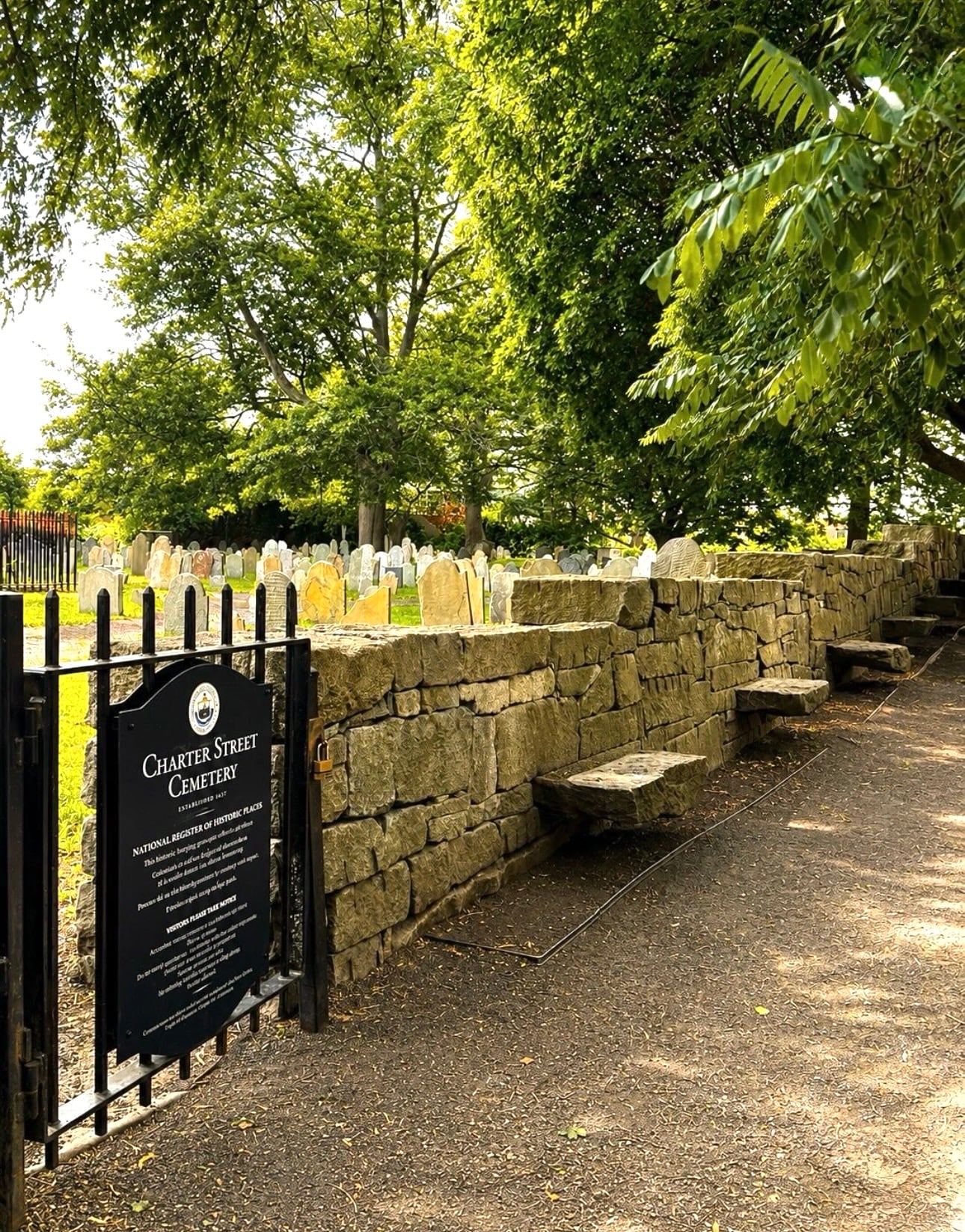
- Salem Witch Trials Memorial — twenty stone benches, one for each person executed, each carved with a name and the true means of death (hanging for nineteen, pressing for Giles Corey). It’s the clearest correction to the burning myth in the whole city.
- Proctor’s Ledge Memorial — the confirmed hanging site, quiet and sobering, rediscovered by historians in 2016.
- The Burying Point — Salem’s oldest cemetery, beside the memorial, resting place of one of the trial judges.
For the fuller story — the sites, the people, and the truths the plaques leave out — see our guide to every real 1692 site you can still visit.
The takeaway
The Salem Witch Trials were horrifying enough without the flames. Twenty people executed, five more dead in jail, a whole community turned against its own neighbors — all of it real, none of it fire. When you correct the “burned at the stake” myth, you’re not nitpicking; you’re restoring what actually happened to twenty-five human beings whose names are still carved in stone a short walk from downtown.
Come see it for yourself: read more of the true history behind Witch City, check what’s on with our Salem events calendar, and browse the full directory of Salem’s historic sites, tours, and museums.